The Falcons' Homegrown Spine: How Edinburgh's Next Crop Earn Their Wings
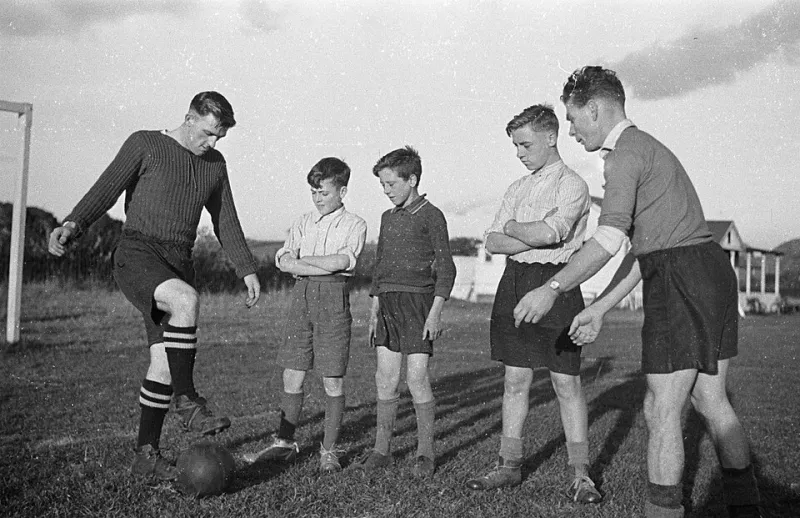
Photo: Geoff Charles, CC BY-SA 4.0, via Wikimedia Commons
At Meadowbank on a dreich Tuesday in November, the Falcons' future is easy to miss. There are no big screens, no thumping pre-match playlist and no queue at the turnstiles. Just a dozen or so teenagers in borrowed bibs, a pair of coaches with clipboards and a cold wind coming off the pitch. It is, in other words, exactly where a homegrown spine begins.
In 2026-27, the conversation around Edinburgh Falcons has often focused on the first team, the next fixture and the latest result. Fair enough. But behind the matchday noise, the club's pathway is doing quieter, more important work: finding local players, developing them properly and giving them a realistic route into the senior squad. That route is not a fairy tale. It is a ladder, and some rungs are deliberately awkward.
It Starts With a Clipboard and a Cold Tuesday
Trial days are not glamorous. They are organised chaos: names checked off, boots inspected, parents hovering near the touchline, coaches asking who can play on both wings and who has actually brought water. The Falcons' pathway coach describes it as the least flashy night of the week, but also one of the most useful. You learn plenty in ninety minutes. Who scans before receiving? Who listens when asked to switch positions? Who disappears when the drills get hard?
That last question matters. The club is not simply looking for the loudest player or the one with the best highlight reel. Coaches talk about attitude, coachability and resilience. A young player from Leith might arrive with raw pace; a kid from Corstorphone might have a lovely first touch. The pathway is designed to find out whether either of them can turn those gifts into something that survives a wet Wednesday in the development squad.
The Pathway Is a Ladder, Not a Lottery
The Falcons do not pretend every trialist will make the first team. That would be daft. What they can offer is a clear set of steps: open trial, development sessions, under-18s, training with the senior group and, for a fortunate few, a first-team opportunity. Each stage has a purpose. The early sessions are about technique and decision-making. The older age groups add physicality, tactical discipline and the kind of game awareness you only get from proper fixtures.
There are recent examples. Callum Rhind, a 19-year-old winger from Leith, came through an open trial and has featured in first-team squads this season. Ross Menzies, a 20-year-old defender from Corstorphone, took a slightly longer route via the development side and is now training regularly with the seniors. Neither story is a straight line. Both involved spells on the bench, tough feedback and plenty of evenings that did not feel like a breakthrough at all.
That is the point. A homegrown spine is not built on one dramatic promotion from the under-18s. It is built on five or six players who know how the club works, who have been coached in the same principles and who can step into the first team without needing a six-week induction. It is also built on the coaches who stay long enough to know the difference between a player having a bad month and a player who has stopped improving.
Why the Homegrown Spine Matters
There is a romantic case for local talent, and a practical one. The romantic case is obvious: supporters love a player who understands the club, the city and the away-day songs. The practical case is just as strong. Homegrown players are usually cheaper, more adaptable and more likely to accept a squad role without kicking up a fuss. They also give the club a buffer when injuries bite or the transfer market does what the transfer market always does.
None of that means the Falcons should ignore experienced signings. A squad needs know-how, and quick fixes have their place. But a club that relies only on short-term arrivals ends up with no memory. The homegrown spine is the memory. It is the thread from the trial-day clipboards to the first-team dressing room, and it is why supporters can look at a young substitute and say, with genuine recognition, that they remember watching him play for the under-16s.
What Coaches Look For
The coaches are not searching for perfection. They are searching for progress. At trial days, they watch how players react to a misplaced pass, whether they ask questions, and whether they can take a instruction on board and apply it five minutes later. Technical ability gets you noticed. Character gets you invited back. The best trialists are not always the ones who score the most goals in the small-sided games; they are the ones who make the players around them look more organised.
Young players who want to be part of it should keep playing, keep asking for feedback and keep turning up. The pathway is not a secret society, but it does reward persistence. Coaches notice the player who comes back after a difficult session. They notice the one who plays with their head up. They notice the one who is honest about what they need to work on.
How Supporters Can Back the Next Generation
Supporters have a role too. It is easy to groan when a 17-year-old misplaces a pass in a senior friendly, but that groan travels. The next generation needs backing, not pressure. Turn up to development fixtures when you can. Learn a few names. Encourage the young lad who is clearly nervous rather than treating every mistake as a personal insult. The Falcons faithful are good at creating noise; the trick is making sure some of that noise is encouragement.
The homegrown heartbeat of this club will not be measured in a single season. It will be measured in the number of local players who feel that the first team is a realistic destination, not a fantasy. That work starts on cold Tuesday nights, with a clipboard and a borrowed bib. It is worth backing.