Fifteen Voices, Three Weeks, One Roar: The Making of a Falcons Chant
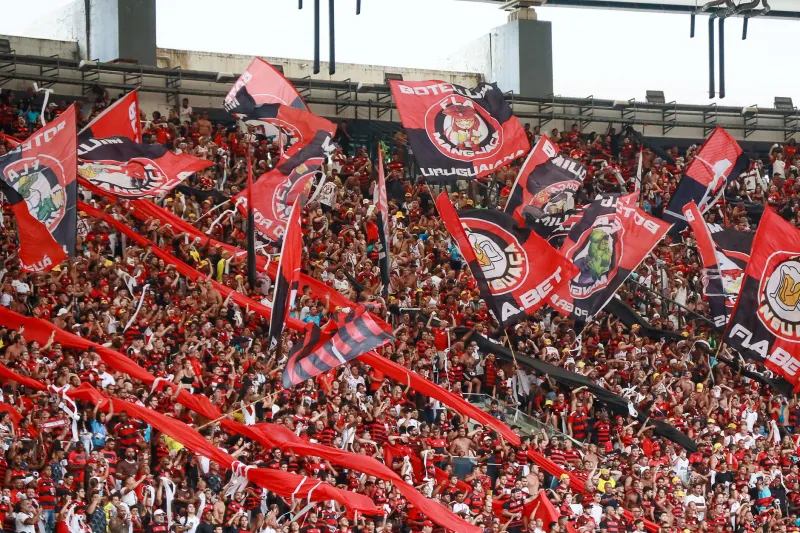
Every club has a songbook. Most of it is inherited. Some of it is borrowed shamelessly. And a small, stubborn slice of it gets made right here, in the draughtiest corner of the ground, by people who are almost certainly going to be hoarse by half-time.
Over the last few weeks we've been tracking one chant through its full life cycle. Not because it's a masterpiece — it isn't, yet — but because watching a song go from fifteen voices to a full terrace tells you more about a club than any press release ever will.
We'll call it the "second ball" number. You'll know the one. If you've been in the ground at any point since early October, you've heard it. If you've been in the ground since early October and haven't heard it, you were probably in the queue for a pie.
The first airing: forty seconds of genuine awkwardness
The debut came on a cold Saturday, ten minutes before kick-off, when the back row was still about twenty strong and the stewards were doing that slow walk that means nothing at all.
One lad started it. Nobody followed for the first line, which is normal. He got through the second line on his own as well, which is less normal and considerably braver. Then three others picked it up, then seven, and by the end of the first run-through there was a proper noise coming from the corner — not big, but shapely. It had a shape. That's the thing that separates a real chant from a bloke shouting.
Then it stopped, and there was that little pause. The one where everyone secretly checks whether anyone else thought it was decent.
"The first time, you're basically asking a question," says a season-ticket holder of fifteen years who was in on the ground floor. "You're saying: is anybody else up for this? And if nobody answers, you have to be alright with looking like a tube. That's the price of admission."
The awkward middle: three weeks of near-misses
Here's what nobody tells you about songs. There's a stretch — usually a fortnight, sometimes a month — where a chant is nobody's favourite and everybody's problem.
Too few people know it to be loud. Too many people know it to be new. It gets started at the wrong moment, usually right after a goal kick, and dies somewhere around the second line. It gets started at the wrong tempo, because the back row speeds up when they're excited and the rest of the terrace is still on the original pace. There's a version of the awkward middle where the same song sounds like two different songs arguing with each other.
We counted. Across three home matches, the second ball number was started nine times and made it past the halfway point on four occasions. One of those was during a stoppage for an injury, which regulars will tell you is cheating. It is also, frankly, how half the songbook got written.
What fixed it wasn't a committee or a capo or a drum. It was a Tuesday night. A midweek fixture, smaller crowd, less background noise, and the corner had room to hear itself. A song that survives a sparse midweek crowd tends to survive everything, because it's learned how to carry without help.
The moment it sticks
You can usually pinpoint the exact minute a chant stops being a project and starts being property. For this one it was the equaliser.
The noise after the goal was the usual chaos — that unscripted roar that has no words in it at all. Then, coming out of the other side of it, someone started the second ball number, and this time the whole stand took it. Not tentatively. Properly. Two verses, no drop-outs, and it finished with that little clap pattern that people had clearly been practising in their own heads.
"That's the switch," says a regular from the middle of the terrace, who has watched a fair few songs come and go. "Up to that point you're teaching. After that point you're reminding. Reminding is easy. Everyone already knows the words, they just need someone to start it."
There's a practical lesson buried in there, and it's one the back row has quietly learned over several seasons: pick your moment after a goal, not before one. Emotionally people are already making noise. You're not asking them to do something new, you're just giving the noise a shape.
What the players make of it
The players, for what it's worth, hear everything — and they are not remotely neutral about it.
Ask them and they'll tell you the obvious: a song with your name in it changes your running. One first-teamer admits he's had a chant go round his head during a match and had to actively tell himself to concentrate. Another says he uses the noise to gauge how the crowd is reading the game — flat singing, flat afternoon.
But they're also honest about the fact that some of the songbook is, technically, nonsense. Doesn't matter. What they want, uniformly, is the same thing the terrace wants: songs that start themselves. A chant that needs a specific person to kick it off is a chant with a shelf life.
One squad member put it better than we could: "I'd rather hear something rubbish that everyone joins in with than something clever that dies after one line."
Which numbers should be nailed down
So we asked the obvious question — the one that always ends in an argument in the pub. Which songs deserve a permanent slot in the 2026-27 songbook?
The consensus went roughly five ways. The old standards stay, obviously, even the ones with a verse nobody has sung correctly since about 2014. Then there's the away-day number — the one that travels well because it's short enough to survive a train and a walk. The second ball number makes the list on form alone. There's a proper slow one for the tense bits of a match, and yes, that earns its place for exactly the reason you'd think: nothing settles a nervous stand like something everybody can sing without thinking.
What didn't make the cut was more instructive. Two recent attempts have already been quietly retired, and nobody seems upset. Both were too long by a verse, and one of them had a line that half the terrace still can't get through without corpsing.
The lesson from the corner
There's no marketing involved in any of this. No announcement, no lyric sheet on the seats, no social media push. It's just a handful of people, three weeks of sounding a bit silly, and one very well-timed goal.
Which is worth remembering the next time you hear something slightly ropey coming from the back row. That's the start of it. Give it a month and you'll be the one belting it out badly.