Before the Roar: The Quiet Script That Sets the Falcons Running
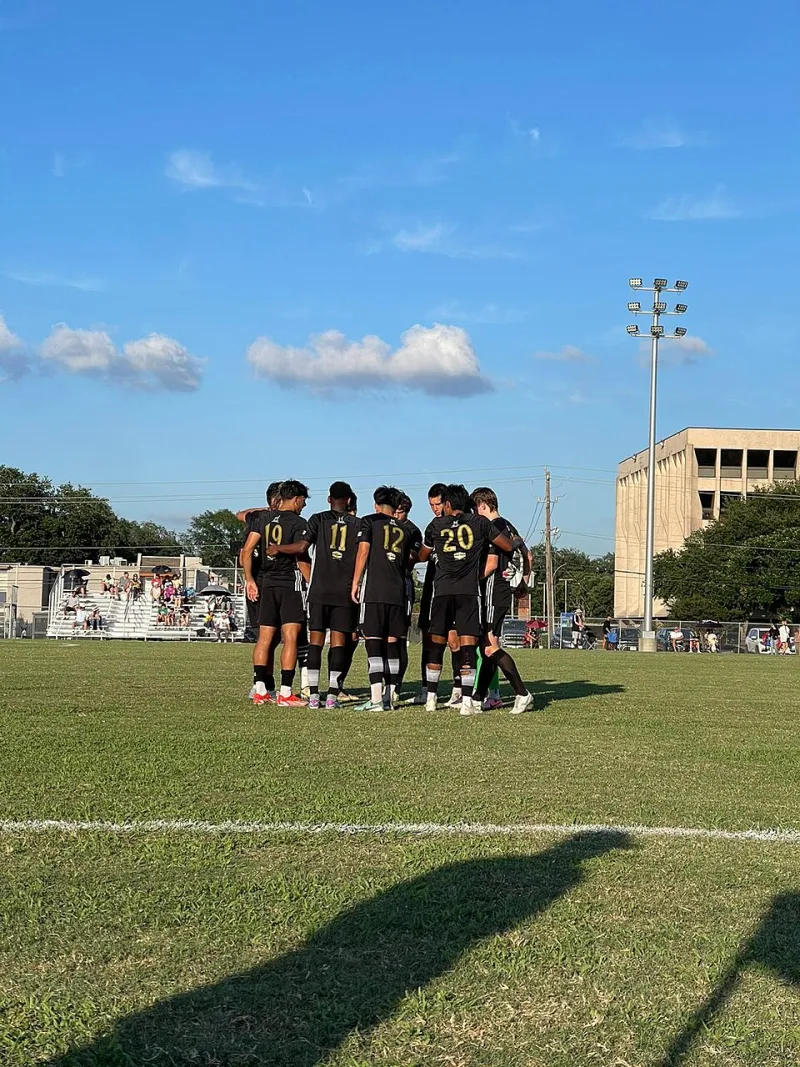
Photo: Uwantsomegum, CC0, via Wikimedia Commons
Matchday at the Falcons does not start with the whistle. It starts thirty seconds earlier, when the circle closes and the noise drops. From the stand, it can look like a scrum of tracksuit tops and a few pointed fingers. Up close, it is a meeting: quick, blunt and loaded with the sort of detail that decides whether the first ten minutes belong to the home side or the visitors.
Ahead of a recent home fixture, we watched the ritual from the mouth of the tunnel and spoke to the people who make it work. No names, no script, no Hollywood speech. Just the last quiet moment before the 2026-27 campaign gets loud again.
The Circle Forms
Two minutes before kick-off, the warm-up is done and the bench is settling. The captain goes first. Not with a shout, but with a look around the group that says: eyes on me. The goalkeeper is last in, gloves still on, and the circle tightens. A coach steps to the edge. He does not join hands or deliver a monologue. He gives one instruction, maybe two, then gets out of the way.
On this occasion, the message was simple: 'First ball, first tackle, first voice.' It is the kind of line that sounds obvious until you watch a team lose the first three duels and spend the next twenty minutes chasing the game. The Falcons have been good at the first bit this season. The huddle is where they remind themselves why.
One senior player told us: 'It is not a team talk. The team talk has been done. This is a reset. You look at the man next to you and remember what he needs from you.'
What Gets Said
Strip away the theatre and the huddle is a checklist. The goalkeeper wants the back line to look after the first five minutes, not just the first ball. A centre-back repeats 'no cheap corners' — a phrase that has probably been said in every dressing room in Britain since football began, but one that matters when the visitors have a big lad at the back post. The midfielders get told to play through the first press once, then go long if it is on. The forwards hear the same thing every week: shoot early if the angle opens.
Then there is the captain's bit. It is rarely Churchillian. More often it is a reminder of identity: 'We run, we talk, we stay compact.' Short sentences. No poetry.
A coach described the huddle as 'a handbrake and an accelerator at the same time'. The handbrake is the nerves. The accelerator is the crowd. 'You can feel the ground filling up behind you,' he said. 'The huddle is the last place where the team is alone. We want them to leave it together.'
Nerves, Toilet Breaks and the Fan's-Eye View
From the terrace, you cannot hear the words. You see the shape: shoulders drop, heads lift, a couple of players bounce on their toes. A young defender once admitted to us that he could not hear his own name in his first home huddle. 'I just nodded and tried to look like I knew the plan,' he said. 'The captain grabbed my shirt and told me I was ready. That was it.'
Supporters have their own ritual. The programme seller pauses. The pie queue does not. One fan near the back of the stand says he always watches the huddle instead of the big screen: 'You can tell if we are up for it. If they are standing tall, we sing before the whistle. If they are looking at their boots, we wait.'
Why It Matters This Season
The Falcons' 2026-27 side is younger than it has been for a while, and the huddle has become a leveller. A teenager who has come through the ranks gets the same thirty seconds as the senior pro who has played 200 games. The message does not change because the name on the back does. That is the point.
It also suits a team that has leaned into a hard-running, compact identity. The huddle is not where the tactics are invented. It is where the tactics are made personal. 'You are not just playing for the badge,' the captain said. 'You are playing for the man beside you. That is easier to remember when you are stood shoulder to shoulder.'
The Thirty Seconds That Set the Tone
Then it breaks. A clap, a roar, a scatter of players into position. The crowd takes over. The huddle is gone, but its work is not. The first tackle, the first pass, the first voice — they all come from that circle.
Nobody hears it from the stand. That is fine. The Falcons do not need a megaphone for the last thirty seconds. They need each other. And on a cold November afternoon in Edinburgh, with the floodlights on and the visitors waiting, that is exactly what they get.