Numb Thumbs and Pinpoint Throws: A Saturday With the Falcons' Touchline Crew
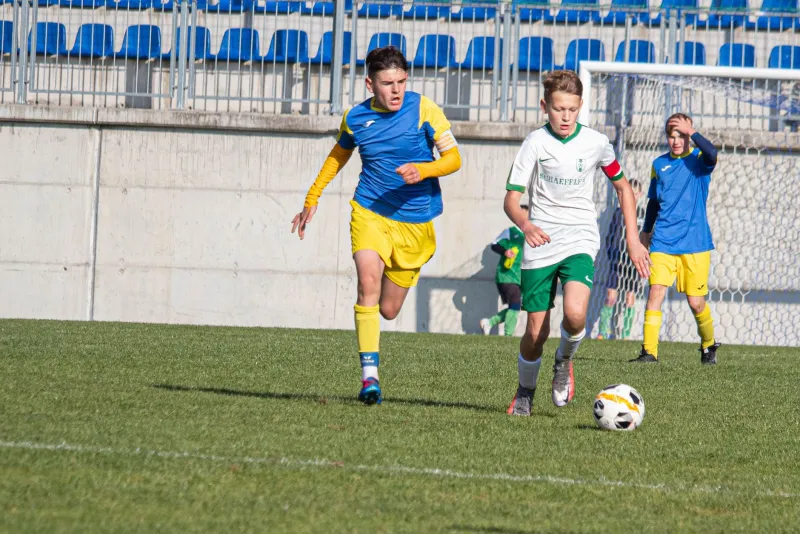
It is 1:52pm and the coldest job at the ground has already started. Not the turnstiles, not the tea hut, not the poor soul stapling a fixture poster to a fence post in a wind that has come straight off the Forth with a grudge. No — the coldest job belongs to six kids in matching jackets, standing in a huddle by the dugouts, counting footballs out loud.
There should be twelve. There are eleven. A brief, panicky search follows, and the twelfth is discovered exactly where you would expect: behind the away bench, where someone left it during warm-ups because it was, quote, "in the way".
The Count Before the Kick-Off
The Falcons' ball crew is drawn from the club's junior ranks — under-14s and under-16s, mostly, with a couple of older siblings folded in when numbers are tight. They arrive ninety minutes before kick-off, get a ten-minute briefing from the matchday coordinator, and then spend the next two hours doing something that looks, from the stands, like nothing at all.
Except it isn't nothing. The briefing covers the obvious — where to stand, when not to stand there, what to do if a ball goes somewhere genuinely dangerous — but it also includes a surprising amount of detail. Which side of the pitch gets the sun in the second half. Which linesman prefers to fetch his own ball. Where the spare pile lives so nobody has to sprint forty yards to reload.
"We tell them the job is to be invisible," says the coordinator, a club volunteer of some fifteen years who insists the crew "does the actual work and I just carry the bag". "If people notice you, something's gone wrong. The best games for us are the ones where nobody remembers we were there."
Reading It Before It Happens
Stand near the touchline for an hour and you start to see the craft in it. A ball goes out for a throw-in on the far side and the nearest crew member is already moving before the whistle — not sprinting, just walking with purpose, reading the angle of the deflection and the body language of the full-back who is about to jog over and take it.
"You learn who's going to sky it," one of the older lads explains, deadpan. "Their winger on the left, he's had three shots and two of them are still in the air somewhere. So you get close to the fence."
There is a hierarchy to it, too. The new ones get the near touchline, where the crowd can see them and the instruction is simple. The experienced ones get the corners, where a ball can disappear behind an advertising board and the recovery is entirely on them. One girl, thirteen, has developed a personal technique for the north-east corner that involves a small hop, a pivot and a flick of the wrist her coach describes, entirely seriously, as "a bit of a specialty".
The One That Went Into the Stands
Not every throw lands. Midway through the second half, a ball rolled towards the home dugout and a substitute, without thinking, launched it back onto the pitch with the force of a man who has been waiting seventy minutes to do something. It cleared the intended target by a good fifteen yards and bounced off a steward's shoulder.
The crew handled it the way they handle everything: a brief, silent conference, a shrug, and a quiet redistribution of duties so the same lad wasn't near the dugout for the next twenty minutes. Gentle discipline, no drama, and a lesson absorbed without anyone having to raise their voice.
That, in miniature, is what the club gets out of this. Kids who learn to be on time, to be where they said they'd be, to take a small amount of stick and keep going. It is not a glamorous pathway. Nobody signs a ball crew member on the strength of a good retrieval. But the Falcons have quietly used the role as a soft entry point into volunteering for years, and a decent number of the people running the tea hut, the 50/50 draw and the turnstile rota started out exactly here, aged twelve, freezing, holding a spare ball.
Credit Where It's Cold
By full time the temperature has dropped another couple of degrees and the gloves have stopped being useful. The crew gathers behind the goal to collect the last two balls, one of which has somehow ended up in a hedge. There is a brief debate about who has to go in after it. There is a brief, entirely expected outcome: the smallest one goes in after it.
Then it's jackets zipped, bag counted (twelve, finally), and a slow trudge towards the chips. Nobody applauds. Nobody should have to. But the next time a ball comes back to the thrower before he's even finished complaining about how long it took, remember there's a kid in a too-big coat who read the whole passage of play before it happened, and who will be back next Saturday, counting to twelve again.