Twenty Minutes of Nothing Much: Inside the Falcons' Deliberate Slow Burn

Photo: Frédéric Humbert - FFR, CC BY-SA 4.0, via Wikimedia Commons
Every home game, the same grumble rolls down from the back of the stand somewhere around the fifteenth minute. It's rarely angry. It's more of a low, communal sigh. We've not started yet. The ball is going sideways. Someone has played a five-yard pass backwards when a five-yard pass forwards was on. The full-back is standing with his hands on his hips, apparently admiring the view towards the Bathgate hills.
And then, twenty minutes later, the game is going the Falcons' way and nobody remembers the sigh.
It's time we retired the phrase. What we're watching in these opening spells isn't a team that hasn't turned up. It's a team working to a script — and a fairly old-fashioned, deeply sensible one at that.
What the first twenty minutes actually look like
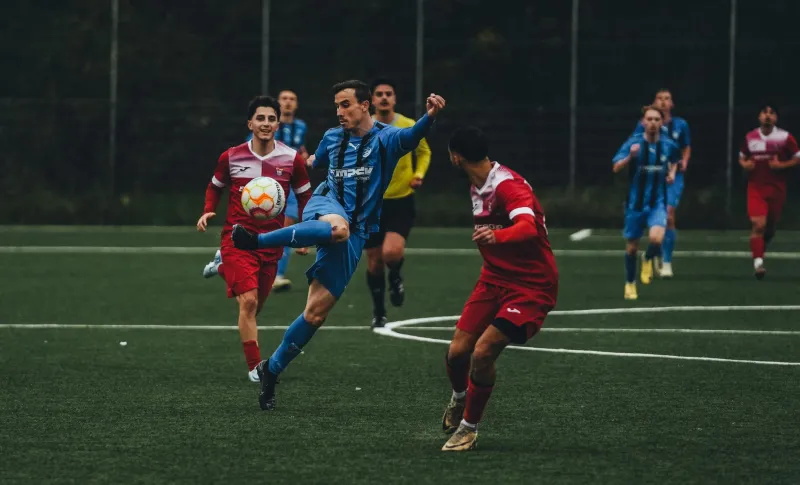
Go back over the home matches so far in 2026-27 and a pattern jumps out. The Falcons keep the ball in their own half for long stretches early on. They play out from the back even when it looks daft to do so. The midfield sits a yard deeper than you'd like. There are more passes across the pitch than up it.
The opposition, meanwhile, get drawn forward. They have to. Sitting off a team that's stroking it around at the back looks passive, and no visiting side wants to be accused of parking the bus in the first quarter of an hour.
That's the whole trick. The Falcons are using the ball as bait.
Drawing them out, then going through them
The moment the opposition's back line pushes up past the halfway line, the geometry changes. The gap between their defence and their goalkeeper becomes a place to play in. The gap between their midfield and defence becomes a place for a runner to arrive from deep.
Watch the Falcons' ball-playing centre-half in the early knockings of the next home game. He isn't surveying because he's short of ideas. He's surveying because he's waiting for their number nine to commit to a press. Once that happens, the pass into the pocket is on, the runner goes, and the whole thing opens up like a set of curtains.
Supporters who've spent years watching the club will recognise the shape of it. It's not a new idea — it's just being executed with more nerve than we've seen before. The players trust the plan even when the crowd is getting twitchy. That takes a certain kind of stubbornness, and honestly, we should be enjoying it rather than tutting.
Energy is a budget, and the Falcons are spending it late
Here's the practical bit. A Falcons side that flies out of the traps for twenty minutes and then has to defend a 1-0 lead for seventy more is a side that runs out of legs in the last quarter of an hour. We've seen it. Everyone has seen it.
The current approach flips that. Keep the intensity in reserve. Let the opposition do the running in the first half, chasing shadows and half-pressing. Then, when legs start to go and the pitch gets a bit longer, the Falcons have something left to spend.
Look at the pattern of the goals this season. A healthy share have come after the hour mark, and a decent number in the final fifteen. That isn't coincidence, and it isn't luck. It's a squad being asked to hold something back, and doing it.
There's a decent argument that it also suits the group — a young squad with plenty of legs but not yet the kind of game-management that lets you defend a lead for an hour without panicking. Asking them to be patient and then explosive plays to their strengths. Asking them to be relentless from kick-off plays to their weaknesses.
So what should you actually watch for?
If you're heading down on Saturday and want to see the plan in action rather than just feel vaguely frustrated, here's a short checklist for the first twenty minutes.
One: who's pressing whom. If the opposition's front two are splitting wide to close down the Falcons' centre-halves, the trap is set. That's exactly what we want.
Two: the tempo of the sideways passes. Slow sideways passes are fine. Slow sideways passes that get faster and more vertical every time the ball reaches a certain midfielder are the ignition point. Watch who starts demanding it.
Three: the full-backs' height. Early on they should be conservative. If you see them creeping higher by the twentieth minute, that's the signal that the Falcons think the space is there.
Four: the first real tackle. Whoever wins the first crunching one usually tells you which team has decided the gloves are off. Nine times out of ten this season, it's been a Falcons player, and it's been around the twenty-fifth minute.
The bit where we all have to be patient
None of this is a licence to be boring. There will be afternoons — probably grim, wet ones in February — where the plan doesn't come off, the opposition doesn't take the bait, and we all sit through eighty minutes of nothing with a lukewarm flask. That's football. The plan isn't infallible; it's just a plan.
But let's give the players the benefit of the doubt in those opening spells. They're not dawdling. They're not lacking bite. They're waiting, deliberately, for the game to open — and then they're going through it.
So next time the sigh starts up around the fifteenth minute, resist it. Have a look at where their right-back is standing instead. That'll tell you more about how the afternoon's going to go than any amount of huffing from the back row.
And if you still can't help yourself, save the shouting for the seventieth minute. That's when the Falcons are planning to be at their loudest anyway.