Frost, Forks and a 6:40 Alarm: The Falcons Pitch Inspection Nobody Sees
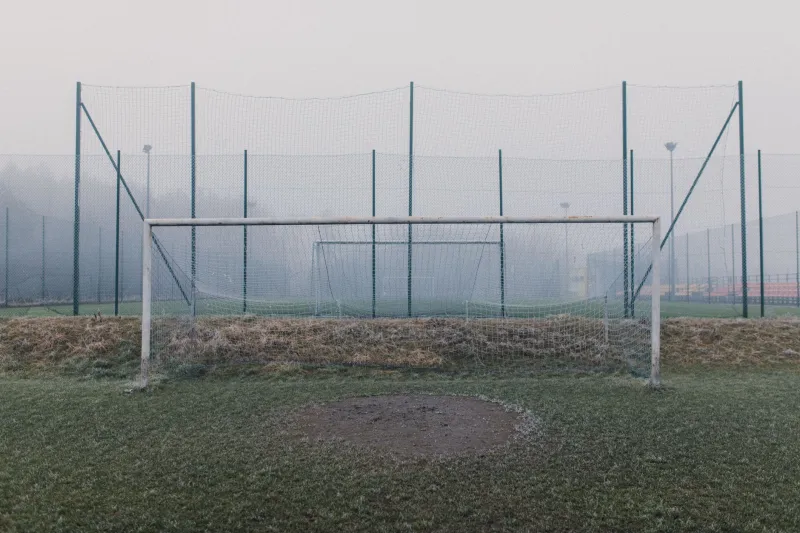
The alarm goes at 6:40. By 7:10 the kettle has done its job, the flask is filled, and the car is defrosting while the rest of Edinburgh is still deciding whether to bother getting up. For most of us, a Falcons home matchday begins with a scarf, a train and a pie. For the man who looks after the pitch, it begins with a torch, a frost forecast and a walk that nobody films.
You will not see him on the highlights. He is not in the tunnel, not on the teamsheet, not in the post-match huddle. But every home fixture at the Falcons sits on top of his morning. The frost covers, the drainage, the fork, the boots, the lonely verdict: play, or don't.
The First Walk
By 7:45 he is at the ground. The floodlights are off. The stands look strange and oversized when empty, like a theatre before the cast arrives. He walks the pitch perimeter first, then cuts across the goalmouths, then the centre circle. He is not doing a lap for the step count. He is reading the surface.
A frozen pitch is not one thing. It is a patchwork. The shaded corner near the away end holds cold differently from the open side. The goalmouths, chewed up by a month of training and matches, are always the first to go. The middle can look pristine and be rock hard two centimetres down. He kneels, presses a thumb in, and frowns at what the thumb tells him.
Then comes the fork. He pushes it into the ground at intervals, listening for the sound it makes. A dull thud is bad. A clean slide is good. A crunch is the sort of thing that keeps a groundsman awake. It is not science in a lab coat. It is judgement built from years of doing it, and it is the sort of judgement that cannot be outsourced to an app.
Covers, Drainage and the Forth Haar
The covers have been down since Friday afternoon. They are heavy, awkward and utterly unglamorous. Pulling them back is a two-person job, and on a winter morning it is a cold-handed, back-stiffening, thankless one. But they are the difference between a game and a postponement more often than anyone outside the ground realises.
Edinburgh weather does not help. The haar rolls in off the Forth and sits on the pitch like a wet blanket. Rain that would drain away in twenty minutes elsewhere can linger here if the wind drops and the surface is already holding. He checks the drainage grips, clears the leaf litter from the corners, and looks at the sky the way other people look at a traffic jam.
There is a myth that the groundsman decides if the match is on. The truth is more nuanced, and more interesting. The referee has the final say, always. But the referee arrives later, sees less, and relies on the club's assessment of the surface and the forecast. The groundsman's verdict is the first verdict. It shapes everything that follows: the covers, the warm-up, the message to the dressing room, the tweet that tells supporters whether to get on the train.
The Lonely Call
By 8:30 the decision is close. The temperature is nudging up, but not fast enough. The forecast says sun, but the forecast also said sun yesterday. He rings the club secretary, then the referee, then the secretary again. He sends photographs. He describes the goalmouth in detail. He does not say yes lightly, and he does not say no lightly either. A postponement costs the club money, inconveniences the fans and frustrates the players. A bad call the other way risks injury and embarrassment.
This is the part nobody sees. Not the fork, not the covers, not the early alarm. The lonely bit. The bit where one man stands on a cold pitch and makes a judgement that will be agreed with or grumbled about by hundreds of people who will never meet him. He does not get a chant. He does not get a man of the match. He gets a flask, a pitchfork and the quiet satisfaction of a game that goes ahead because he got it right.
What the Rest of Us Miss
When the turnstiles open, the pitch looks like it has always been there. That is the trick of good ground work. It looks natural, obvious, effortless. The lines are straight, the goalmouths are playable, the surface is safe enough to sprint on and soft enough to fall on. Nobody claps. Nobody should have to. But it is worth knowing that the patch of grass the whole club depends on is not maintained by magic or by a contractor three counties away. It is maintained by someone who was here at 7:45, who will still be here at 6pm, and who will be back on Monday to do it all again.
So next time you walk to the ground and see the covers stacked neatly by the touchline, give them a nod. Somewhere nearby, a man with a flask is watching the sky and hoping he got it right. The Falcons play on his morning. The least we can do is notice it.